

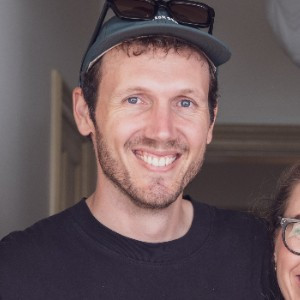
I'm going to sit in a box for 20 hours and not say a word. Here's why that's actually pretty easy for me.
UPDATE: Every donation will now be doubled
Premier Electrical has generously agreed to match every donation made to my fundraiser, dollar for dollar, up to a total of $2,500.
It is an incredibly generous commitment and a great opportunity to make every contribution go twice as far.
------------------------------------------------------
Here’s something most people don’t know about me. Put me in a room with 300 people and a microphone and I’m fine. Hand me a canapé and walk me into a party full of strangers and I can feel the anxiety rising before I’ve even found the cheese.
My partner Em is the opposite. She gets a genuine buzz from meeting 20 new people in an evening. So when I’m at a party, I find one person. I ask them a question. And then I listen, really listen, because I’m genuinely curious about what makes them tick.
Em has pointed out over the years that something shifts in people when I do this. Their guard drops. The “how are you, yeah good, you?” exchange gives way to something real. We end up workshopping their business idea, or they share something they haven’t told many people, or we’re deep in a conversation neither of us expected to have. I don’t know what that is exactly. But I think it matters. Too many of us never get there. We put on the everything-is-fine face, and we wear it so long it starts to feel like the truth.
Suicide is the leading cause of death for Australians aged 15 to 44. It accounts for more years of life lost than any other cause of death in this country. And only 2% of mental health funding goes towards prevention.
A lesson from washing clothes
A few years back I volunteered for Orange Sky Laundry. Before I turned up, I’ll be honest. I thought, washing clothes, that’s not going to solve homelessness. What I didn’t understand was that the laundry is just the reason people show up. The actual work is the conversation that happens while they wait. It’s connection. It’s someone seeing them. That’s what breaks cycles. That’s what changes things.
20Talk works the same way. They go into TAFEs and universities across WA and run free, one-day Mental Health Maintenance workshops, for young people, by young people. The goal is simple and important: reach people before they hit crisis point, not after. Give them the language, the awareness, the tools. Because once someone is in crisis, the conversation is a lot harder.
What I’m actually doing
On September 5th, I’ll be sitting in a 2x2 metre square with 400 other people. No talking, no phone, and no distractions. Just a chair, a journal, and my thoughts for 20 hours straight.
I’m not going to pretend that’s the same as what someone navigating a genuine mental health crisis experiences every day. It isn’t. But it’s a small, deliberate attempt to understand a fraction of that isolation and, with your help, to make a meaningful impact.
What your donation achieves
$120 puts a young person through a full day workshop. $60 covers half of that. Whatever you can give goes directly into 20Talk’s Mental Health Maintenance programs, the courses running right now in WA universities and TAFEs.
One more thing you can do, and it costs nothing
Think of one person in your life who could use a real conversation. Not a “how are you, yeah good” one. A real one. Reach out to them today. That’s it. That’s the whole ask. And if reading this made you think of someone, that probably isn't a coincidence.
Thanks for reading.
Sam


Thank you to my Sponsors
$2.5k
Premier Electrical Services (wa)
$540
Craig Peterson
A great initiative and a great cause
$516
Mouve Asset Management Team
Amazing thing to do Sam, we will be cheering you on!!
$500
Aspen Group
$318.90
Pearmans Electrical Services
$269.13
Effective Building Group
Speechless effort!
$128.10
Port Property Maintenance
What an awesome initiative, all the best mate!
$106.75
Richard Young
Enjoy the silence Sam
$106.75
Matt Delroy-carr
$100
Chris Gibbs
$100
Patrick Maddern
$82.13
Cheyenne Payne-poultney
So proud of you!
$55.95
Justin Mansillas
$55.95
Lindsay Walton
You good man!
$55.95
Paul Young
Go for it Sam !
$55.95
Sally Kelso
I did not know that about you Sam. But I’m the opposite - put me in front of a microphone and a room with 300 people and that’s my very worst nightmare 😆 Nice one for doing this 🙌
$55.95
Ben Darwent
Brilliant stuff mate.
$50
Brayden
best ops manager at APZ
$50
Hannah Oliver
You rock Sam!
$34.40
Margaret Roberts
Amazing cause Sam, good on you! 👏⭐️⭐️👏
$34.40
Sheridan Currie
Amazing cause! Goodluck
$30
Jeremy Dodds
$28.81
Conor Wall
$11.92
Adrian Mullee
$6.20


Well done Sam, great job raising so much dogh. I'm really sorry I couldn't be there with you this year but wishing you all the best on Sat. Big love Graham